Opening Soon
Medication alone doesn’t work for everyone. If you’ve tried antidepressants without finding real relief, iTBS, a faster, FDA-cleared form of transcranial magnetic stimulation, targets the brain activity driving your symptoms directly. At The Mind Grove TMS Center, we treat adults and adolescents ages 15 and older in Colorado Springs using iTBS as our primary TMS protocol. For patients where medication still has a role, we incorporate it alongside treatment when it makes clinical sense. See if iTBS is right for you.
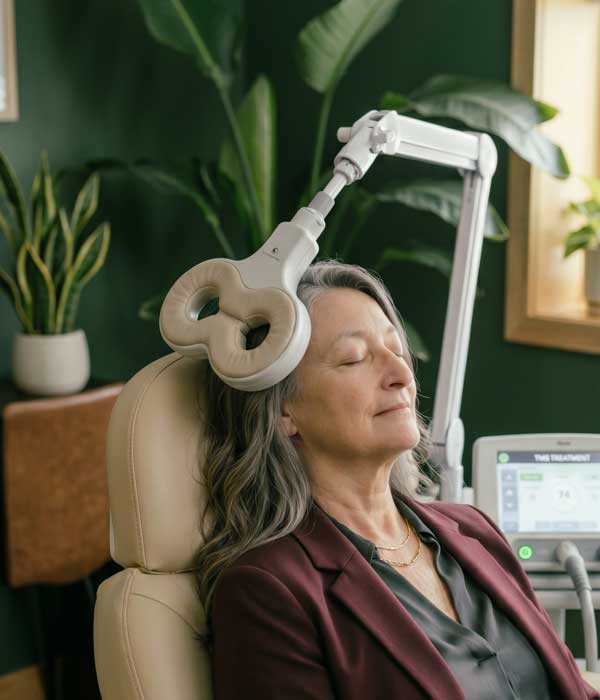
Intermittent theta burst stimulation delivers focused magnetic pulses to the prefrontal cortex in a pattern that mirrors your brain’s own natural theta rhythm. This region is consistently underactive in people living with depression, anxiety, and related conditions. By directly stimulating it, iTBS encourages neural changes that support improved mood and emotional regulation.
Each session takes approximately three minutes of active stimulation. No anesthesia, no sedation, no recovery time. You sit in a comfortable chair, fully awake, and drive yourself home when it’s done. The effects build gradually across your full course of treatment through neuroplasticity, your brain’s ability to reorganize and strengthen its own connections over time.
Before treatment begins, you will meet with your provider for a thorough clinical evaluation. We review your diagnostic history, your medication trials, your current symptoms, and your goals. If iTBS is the right fit, we calibrate your stimulation intensity precisely to your neurology through a process called motor threshold determination.
Sessions are conducted in our Colorado Springs office. You sit comfortably in a chair, fully awake, while a magnetic coil delivers focused pulses to targeted areas of your brain. iTBS sessions take approximately three minutes of active stimulation. No anesthesia or sedation is required, and you can drive yourself to and from every appointment.
A standard iTBS course consists of 36 sessions delivered five days a week over six weeks. Most patients begin noticing shifts in mood, sleep, or energy between weeks two and four. At your final session, your provider will walk you through a personalized maintenance plan that may include medication, individual therapy, and lifestyle practices that protect the progress iTBS helped create.

The Mind Grove was founded by a physician who holds a PhD in Developmental Genetics and completed a postdoctoral research fellowship in Neurobiology. That scientific depth informs every treatment decision made here.
Our founder is dual board-certified in Adult Psychiatry and Child and Adolescent Psychiatry, with a fellowship completed at Georgetown University Hospital. For adolescent patients ages 15 and older, that background matters.
The Mind Grove accepts insurance for FDA-cleared, insurance-eligible indications. Coverage varies by payer and indication.
Colorado Medicaid does not currently cover TMS.
iTBS delivers those pulses in a theta-burst pattern that replicates the brain’s own rhythms. Each iTBS appointment takes approximately 20 minutes, with the stimulation portion itself lasting around 3 minutes, compared to 20 to 40 minutes of active stimulation in a conventional rTMS session.
Both use magnetic pulses to stimulate targeted brain regions. iTBS delivers those pulses in a theta-burst pattern that replicates the brain’s own rhythms, which allows the treatment to be completed in roughly three minutes rather than 20 to 40. The clinical outcomes are comparable.
iTBS is covered by insurance for FDA-cleared indications including treatment-resistant depression and MDD with co-occurring anxiety in adults and adolescents ages 15 and older. Coverage for other indications varies by payer. Our team will verify your benefits before treatment begins.
For some patients, continuing or adjusting medication alongside a course of iTBS produces better outcomes than either approach alone. Your provider will evaluate your full history and determine the combination that makes the most clinical sense for your situation.
iTBS is not appropriate for people with certain metal implants in or near the head, or for those with a history of seizure disorders. Your clinical evaluation will clarify whether you are a good candidate.
Yes. No sedation or anesthesia is involved. Patients drive themselves to and from every session.
If you or someone you care for has not found sufficient relief through medication, iTBS therapy at The Mind Grove TMS Center may be worth exploring. Reach out to learn whether you are a candidate.